Online Master of Arts in Counseling
Ouachita Baptist University’s online Master of Arts in counseling degree program prepares you for a meaningful career helping others overcome life’s challenges. This low-residency program equips you to become a Licensed Professional Counselor skilled in assessing, diagnosing and compassionately treating those facing mental health and emotional issues.
Grounded in a biblical worldview that sees all people as made in God's image, Ouachita's master’s in counseling trains you to serve diverse clients with professionalism, cultural sensitivity and the highest ethical standards.
Learn from expert counseling professionals through a combination of four on-campus intensives, online coursework and supervised clinical experiences focused on responding to the growing need for mental health services nationwide.
Bridge coursework and clinical experience to improve the lives of individuals as a licensed professional counselor in settings such as:
Churches and Christian Counseling Centers
Community Mental Health Centers
Hospitals
Nonprofit Organizations
Prisons
Private Counseling Agencies
Rehabilitation Centers
School Districts
Explore our online master’s in counseling highlighted courses:
Orientation to the Counseling Profession
Biblical Foundations for Counseling
Group Process and Counseling
Counseling Skills and Techniques
Relationship Dynamics and Family Systems
Crisis and Trauma Counseling
Professional Ethics and Legal Issues
Ouachita’s counseling degree program does not require any particular undergraduate degree or area of concentration for acceptance.
Housed in Ouachita’s W.H. Sutton School of Social Sciences, the low-residency, 63-hour M.A. in counseling degree program combines four 4-day, in-person intensives; synchronous and asynchronous online classes; internship experiences; and practicum placements. Ouachita’s online master’s in counseling application opens September 14, 2025, for enrollment starting in August 2026. The first round of application review will begin on October 15, 2025.

test
Total Credit Hours

test
On-Campus Intensives

test
Years' Experience Among Faculty

test
Clinical Credit Hours
In their words
hear from a faculty member.
"It’s easy to look around the world right now, see all the anxious, angry people and feel like there’s nothing we can do. This program allows us to train students to walk beside people in their worst moments and help those who are truly hurting. Our goal is to train up a new generation of ethical, competent Christian counselors who can really make a difference."
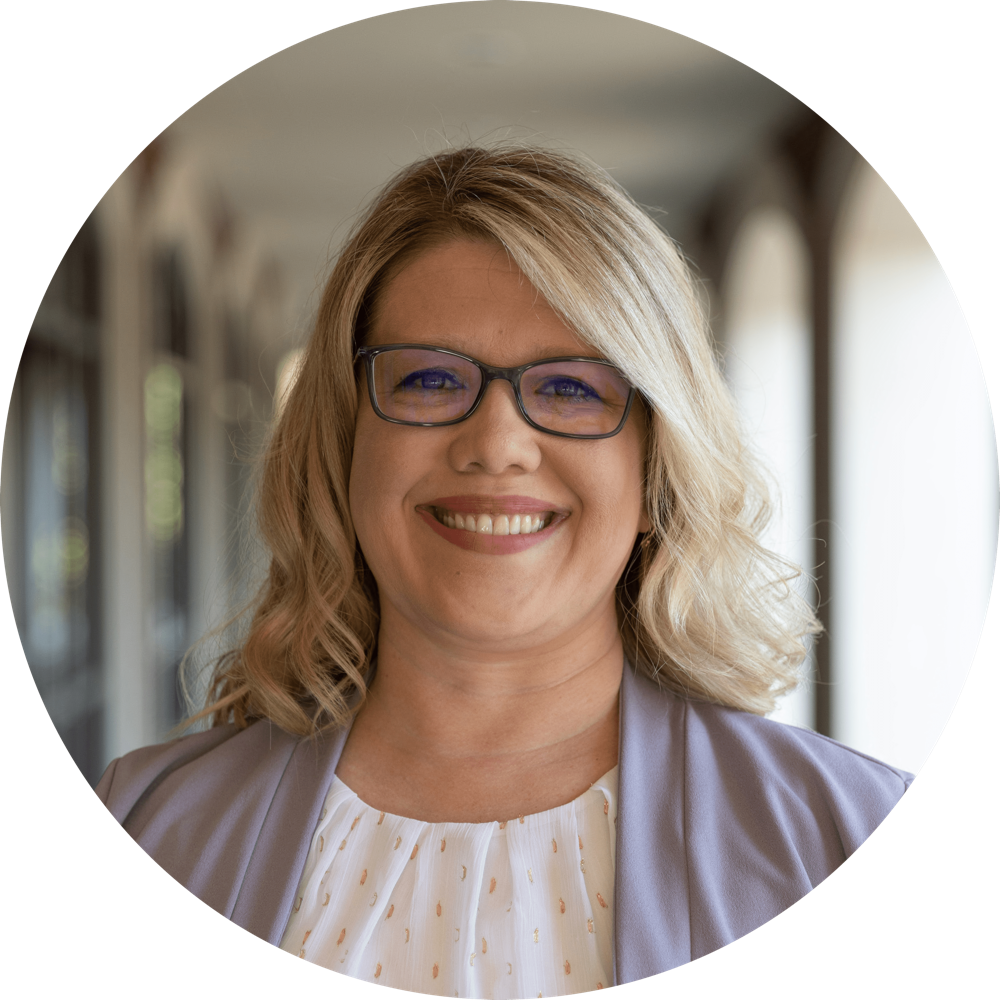 Sandra Gilliland, Ph.D., LMFT
Professor and Director, Mental Health Counseling Program
Program Details
|
Year 1 |
|||||
|
Fall (semester 1) |
Spring (semester 2) |
Summer (semester 3) |
|||
|
Term 1 |
Term 2 |
Term 1 |
Term 2 |
Term 1 |
|
|
COUN 6113: Orientation to the Counseling Profession |
COUN 6123: Theories of Counseling |
COUN 6213: Psychopathology and Psychopharmacology |
COUN 6223: Human Growth and Lifespan Development |
COUN 6313: Biblical Foundations for Counseling |
COUN 6323: Assessment Techniques in Counseling |
|
COUN 6133: Professional Ethics and Legal Issues |
COUN 6233: Counseling Skills and Techniques |
||||
|
9 credits |
9 credits |
6 credits |
|||
|
Year 2 |
|||||
|
Fall (semester 4) |
Spring (semester 5) |
Summer (semester 6) |
|||
|
Term 1 |
Term 2 |
Term 1 |
Term 2 |
Term 1 |
|
|
COUN 6413: Case Conceptualization and Treatment Planning |
COUN 6423: Group Process and Counseling |
COUN 6523: Relationship Dynamics and Family Systems |
COUN 6723: Crisis and Trauma Counseling |
COUN 6613: Social and Cultural Diversity |
COUN 6623: Career Development |
|
COUN 6433: Research and Program Evaluation |
COUN 6533: Counseling Practicum |
COUN 6542: Internship 1 (8 weeks) |
COUN 6632: Internship 2 (11 weeks) |
||
|
9 credits |
11 credits |
8 credits |
|||
|
Year 3 |
|||||
|
Fall (semester 7) |
|||||
|
Term 1 |
Term 2 |
||||
|
COUN 6513: Contemporary Therapy Models and Telehealth: Special Topic |
COUN 6713: Addiction Therapies |
||||
|
COUN 6733: Counseling Capstone for CMHC |
|||||
|
COUN 6742: Internship 3 (16 weeks) |
|||||
|
11 credits |
|||||
Online asynchronous | In-person intensive + synchronous online | Synchronous online | Weekly supervision meeting
Online Master’s in Counseling Admissions Requirements:
- 3.0 minimum cumulative GPA on a 4.000 scale or 3.0 in last 60 credit hours of bachelor’s degree
- Submit a statement of purpose intended to give the counseling faculty a sense of why
you want to pursue a degree in counseling. Your statement of purpose should include:
- a short description of what led you to the counseling profession.
- an explanation of why you want to get your degree at Ouachita Baptist University in a program that integrates Christian faith into your counseling education.
- information on how you plan to balance the degree requirements with any other personal or professional responsibilities in your life.
- Three recommendations with evaluation forms indicating evidence of character and capability to successfully serve as an effective mental health professional
- Admission interview with program faculty
- National Criminal Background Check and Sex Offender Registry Check
In Ouachita’s counseling degree program, all admitted students are required to meet the following program requirements:
- All admitted students must achieve a grade of B or better on all counseling coursework to satisfy Arkansas state requirements for licensure.
- All students must attend all four in-person intensives during the program.
- All students must comply with the attendance policy for synchronous class time on Thursday nights.
The master’s in counseling program at Ouachita Baptist University seeks to provide ethical, evidence-based counselor education that combines academic rigor with clinical experience. Grounded in a biblical worldview and believing all human beings are made in the image of God and consequently merit respect and compassionate care, Ouachita prepares students to serve diverse populations as they aid in God’s restorative mission of healing and reconciliation.
Online Counseling Program Tuition and Fees
- Tuition per graduate credit hour: $550
- Estimated total tuition and fees for full 63-hour program: $36,768
Learning Outcomes
Graduates of Ouachita’s clinical mental health counseling program will be able to:
- Demonstrate knowledge central to scholarly inquiry and professional practice of clinical mental health counseling.
- Apply relevant skills to assess, diagnose and treat individuals from a diverse clinical population in an ethical and effective manner.
- Demonstrate professional counselor behaviors for personal growth, self-care and wellness.
- Develop a professional counselor identity and practice consistent with personal beliefs and professional career goals.
The counseling faculty at Ouachita evaluates student learning outcomes through a variety of assessment modalities to ensure all graduates obtain the necessary knowledge and skills needed to be ethical, competent, effective counselors. Information gathered informs program planning and improves program effectiveness.
Throughout the program, all admitted students engage in continuous evaluations. This
evaluation process fulfills Council for Accreditation of Counseling and Related Educational Programs (CACREP)
standards and professional gatekeeping responsibilities, ensuring each student has the skills
and emotional maturity for a professional counseling career.
Program Objectives & Vital Statistics
Degree: Master of Arts in Counseling
Specialization: Clinical Mental Health Counseling (CMHC)
Delivery Format: Hybrid (online courses + on-campus intensives)
Program Length: 2.5 years (full-time)
On-Campus Intensives: Four total, scheduled at key transition points for hands-on skill development and
cohort connection
Accreditation Status: Actively pursuing CACREP accreditation; Self-Study submission planned for Spring 2026
Student Enrollment and Success
|
Measure |
AY 2024–2025 Outcome |
Next Update |
|
Current Enrollment |
20 students in first cohort (launched Fall 2024) |
Fall 2025 |
|
Cohort 2 Enrollment |
24 students (20% growth) |
Fall 2026 |
|
Year-to-Year Retention |
95% (19 of 20 students retained) |
Sept. 2026 |
|
Program Completion Rate |
Pending – first graduates expected December 2026 |
Spring 2027 |
|
Job Placement Rate |
Pending – to be tracked within 12 months post-graduation |
Spring 2028 |
|
Licensure/Comprehensive Exam Pass Rate |
Pending – first CPCE administration in Fall 2026 |
Spring 2027 |
Counseling Program Outcomes and Evaluation Summary Report AY 24-25
Continuous Improvement
Ouachita’s counseling program collects and reviews outcome data each academic year to ensure continuous quality improvement. Annual updates include student achievement data, faculty evaluations, and external advisory board feedback, reviewed every September.
Last Updated: October 2025
Data reported from the 2024–2025 Annual Program Evaluation Report.
Ouachita Baptist University remains committed to transparent reporting and ongoing
alignment with CACREP 2024 Standards
If you’re interested in applying to a Ouachita graduate program but are not a U.S. citizen, contact your graduate admissions counselor, Roxanne Easter, at [email protected] before submitting an application. Due to visa requirements, admission requests from non-U.S. citizens are addressed on a case-by-case basis and take extra time. Please inquire early in the process.
Minimum English proficiency requirements for international students are:
- Test of English as a Foreign Language (TOEFL):
- At least a 79 on the internet-Based TOEFL (iBT)
- At least a 550 on the paper-based TOEFL
- International English Language Testing System (IELTS):
- At least a 6.5 on the IELTS exam
Learn about the international student experience and admissions requirements.
The Counseling Compact Commission provides information regarding states that provide a privilege to practice in other member states. Arkansas is a member of the Counseling Compact. Information and a map of states that have passed legislation, have legislation pending and who have not yet joined the compact can be viewed here.
The Master of Arts in Counseling program meets educational requirements for licensure in the state of Arkansas and is pursuing CACREP accreditation. Students interested in obtaining a license in another state should check with the applicable licensing authority in that state to ensure that Ouachita’s program meets the state's education requirements for eligibility for licensure. Students may visit the American Counseling Association licensure requirements by state.
For additional information, you may contact the Counseling program by emailing [email protected].

No Background? No Problem
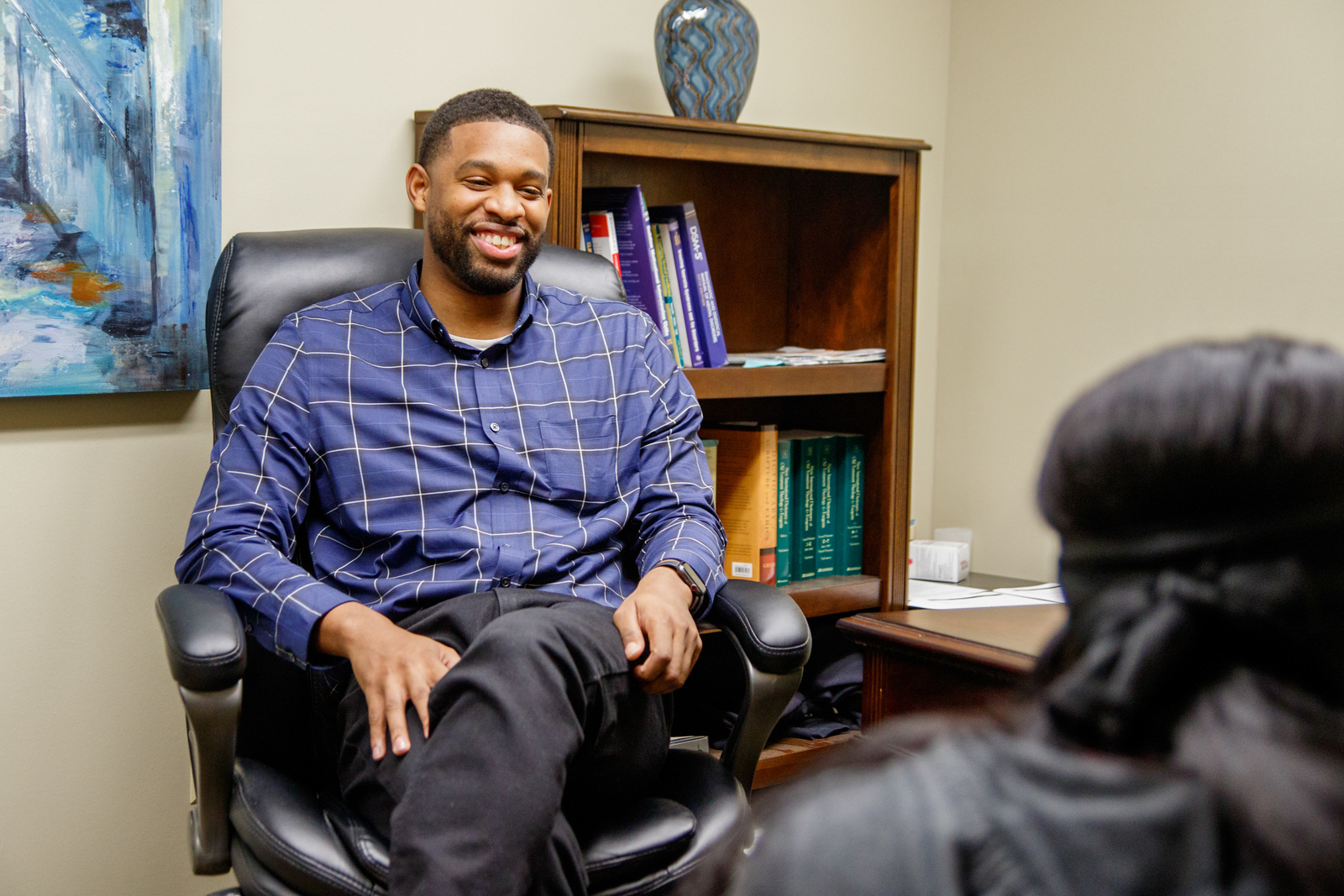
Whether you’re beginning your career or making a career change, Ouachita’s online master’s in counseling program can prepare you for a life of meaningful work. Students of all ages are eligible, and prior psychology experience isn’t required! Our low-residency format is ideal for working professionals or busy individuals who want to make an impact through counseling.
High Standards, High Achievement
Ouachita’s master’s in counseling program is designed to achieve national standards for excellence set by CACREP. By meeting rigorous benchmarks for real-world practice, the M.A. in counseling prepares graduates to pass the National Counselor Exam for licensure in Arkansas and other CACREP-affiliated states. Students develop clinical skills through robust coursework and supervised experience while forming a professional network.

Academic Rigor, Faith Integration
At Ouachita, classroom instruction is grounded in a biblical worldview that stimulates academic and spiritual growth essential for effective Christian counseling. Curriculum focuses on complex, real-world issues while anchoring students in ethical foundations for practice. With flexible modalities accelerating completion, the program's comprehensive training and supervised clinical experiences give you tools to excel in a demanding profession.




Our Mission
makes the difference.
The demand for mental health services has drastically increased nationwide, especially since the COVID-19 pandemic. Ouachita’s M.A. in counseling degree program rises to meet this pressing need by equipping graduates for impactful service as licensed counseling professionals. Students acquire the knowledge and experiential training to guide individuals toward healing and addressing mental health issues through a biblical lens. Our graduates step into growing career opportunities, leveraging their counseling expertise to improve lives.
Meet our Counseling Faculty
Sandra Gilliland, Ph.D., LMFT
Program Director | Professor of Counseling | Core Faculty
Dr. Sandra Gilliland holds a Ph.D. in psychology and counseling from New Orleans Baptist Theological Seminary and is a Licensed Marriage and Family Therapist in the state of Arkansas. She also holds a Master of Theology and a master’s degree in marriage and family counseling.
Dr. Gilliland serves as director for the M.A. in counseling program at Ouachita Baptist
University, where she provides leadership in curriculum development, accreditation,
program evaluation and faculty mentoring. She has extensive experience in higher education
teaching, research supervision and program leadership, as well as clinical experience
in private practice and community mental health settings.
RESEARCH INTERESTS
Faith integration in professional counseling; counselor identity development; emotional intelligence and spiritual formation; attachment and relational processes; ethical inclusion of faith in counseling; therapist self-care and embodied health; counselor education pedagogy and program evaluation.
Kristy Burton, Ph.D., LPC-S, NCC, MAC, AADC, CCS
Director of Clinical Training | Core Faculty
Dr. Kristy Burton holds a Ph.D. in counselor education and supervision from the University of the Cumberlands with an emphasis in addictions. She is a Licensed Professional Counselor and board-approved supervisor in Arkansas and Missouri, also holding advanced credentials such as National Certified Counselor (NCC), Master Addictions Counselor (MAC), Advanced Alcohol and Drug Counselor (AADC), and Certified Clinical Supervisor–Addictions (CCS). She is also certified in Brainspotting and holds specializations in technology-assisted counseling and clinical supervision.
Dr. Burton serves as director of clinical training for the M.A. in counseling program,
overseeing practicum and internship placement, supervision structures and clinical
readiness. She brings extensive clinical experience in private practice, community
mental health, school-based counseling and correctional settings, with a strong emphasis
on co-occurring mental health and substance use disorders. In addition to her clinical
work, Dr. Burton has held significant leadership roles within state and national counseling
organizations and currently serves as a CACREP site visitor and president-elect of
the Arkansas Counseling Association.
RESEARCH INTERESTS
Co-occurring mental health and substance use disorders; clinical supervision and supervisor development; trauma-informed counseling and leadership; domestic violence intervention programs; ethics and technology-assisted supervision; counselor education and professional identity development.
Robert D. Loper, Ph.D., LPCC
Assistant Professor of Counseling | Core Faculty
Dr. Robert Loper holds a Ph.D. in counselor education and supervision from Regent University and a Master of Arts in clinical mental health counseling from Indiana Wesleyan University. He is a Licensed Professional Clinical Counselor and is EMDR trained.
Dr. Loper brings extensive experience in counselor education, clinical practice and
ministry leadership. He has taught graduate and undergraduate counseling courses across
multiple institutions. Clinically, he has worked in substance use treatment and community
mental health settings, providing assessment, treatment planning and individual and
group counseling for co-occurring disorders. His professional experience uniquely
integrates clinical counseling, supervision, teaching and pastoral leadership.
RESEARCH INTERESTS
Addictions counseling and recovery; co-occurring mental health and substance use disorders; emotion regulation and emotional intelligence; counselor burnout and impostor phenomenon; clinical supervision; interdisciplinary approaches to treatment; integration of spirituality and religion in counseling and addiction recovery.
Tammy Wright, Ph.D., LPCC-S, NCC
Assistant Professor of Counseling | Core Faculty
Dr. Tammy Wright holds a Ph.D. in counselor education and supervision from Lindsey Wilson College and is a Licensed Professional Counselor Supervisor and National Certified Counselor. She is also EMDR trained.
Dr. Wright brings experience in counselor education, clinical practice and online
graduate instruction. Her clinical background includes work with children, adolescents,
adults, families and veterans across outpatient and residential settings, with a strong
emphasis on trauma-informed and attachment-based care.
RESEARCH INTERESTS
Trauma and attachment across the lifespan; counselor wellness and self-care; play therapy and expressive interventions; ethical practice in counseling; counselor education and supervision; clinical training models for rural and underserved populations.
Sean Culpepper, MA, LPC-S
Instructor of Counseling | Affiliate Clinical Faculty
Mr. Sean Culpepper holds a Master of Arts in marriage and family counseling and a Master of Arts in Christian education from Southwestern Baptist Theological Seminary. He is a Licensed Professional Counselor Supervisor in the state of Arkansas and holds advanced specializations in counseling supervision and technology-assisted counseling. Mr. Culpepper is an EMDR Certified Practitioner and has advanced training in emotionally focused therapy, trauma-focused cognitive behavioral therapy, and community-based trauma response models. He is currently a doctoral student in counselor education and supervision at New Orleans Baptist Theological Seminary.
Mr. Culpepper brings more than two decades of professional experience in counseling, clinical supervision and leadership, along with over thirty years of ministry experience. His background includes extensive work in outpatient mental health settings, child and family services, hospital chaplaincy and ministry leadership. As an instructor, he teaches graduate-level counseling courses and supports practicum, internship and experiential learning through supervision and mentorship.
Terri Howe, Ph.D., LPC-S
Assessment and Career Coordinator
Dr. Terri Howe holds a Ph.D. in counselor education from Texas A&M University-Corpus Christi and is a Licensed Professional Counselor Supervisor in Texas.
Dr. Howe brings extensive experience in counselor education leadership, program assessment, career development and student success initiatives. She has served as a counselor education program director, faculty member, and career services leader across multiple institutions. In her current role, she supports program assessment, continuous improvement processes and student career preparation.




Ouachita Baptist University's graduate programs cater to individuals committed to lifelong learning or seeking career advancement. The programs employ innovative modalities in diverse fields, ensuring that students find success professionally and spiritually. Emphasizing a sense of community, Ouachita cultivates meaningful relationships among students and professors for a supportive and enriching educational experience.
GET IN TOUCH
Speak with a graduate admissions counselor to get started with Ouachita Baptist University. Answer your calling to compassionately impact lives with a Master of Arts in counseling degree.